 How-to
How to Eat Sustainably When You Have No Time to Cook
Quick Summary
Sustainable eating on a packed calendar comes down to a repeatable system rather than daily cooking. Prep four components once a week, such as roasted vegetables, a bulk-cooked protein, a starch, and a sauce, then assemble meals in two minutes. Gundry-friendly eating fits this approach because it centers on whole vegetables, quality proteins, and healthy fats while limiting lectin-rich foods.
- Cook four components on Sunday and assemble different meals each day to reduce decision fatigue.
- Roast 2-3 Gundry-friendly vegetables at 425°F with extra virgin olive oil and sea salt.
- Remove sweet potato skin before cooking, since the skin carries more lectins.
- Keep canned wild salmon, olives, nuts, and frozen greens on hand for quick meals.
- Store cooked food in the refrigerator for up to four days and freeze the rest.
Table of Contents
- Why Sustainable Eating Gets Harder When Your Calendar Is Full
- Sustainable Meal Planning for Busy Professionals
- Easy Meal Prep for Busy Professionals: A Step-by-Step Routine
- Gundry Friendly Pantry Staples to Keep on Hand
- Quick Healthy Meals for Work: Gundry Friendly Recipes and Why They Work
- Sourcing Sustainably Without Adding Hours to Your Week
- How to Build Healthy Eating Habits That Last Past the First Month
- Frequently Asked Questions
Sustainable eating doesn't have to mean spending your evenings in the kitchen. When your calendar is full, the goal is a repeatable system that keeps you eating well with minimal effort. Gundry-friendly eating, which generally means limiting lectin-rich foods such as legumes, grains with hulls, and nightshades, fits well into that system because it centers on whole vegetables, quality proteins, and healthy fats. For a practical way to add a plant-forward day to your week, see meatless meal ideas for a busy schedule. At Nutrition is Fashionable, we build this kind of eating pattern around your schedule rather than a restrictive, one-size-fits-all plan.
Why Sustainable Eating Gets Harder When Your Calendar Is Full
Busy weeks push out good intentions first. Meetings run long, lunch becomes whatever is nearby, and dinner gets decided at 7 p.m. when everyone is tired.
Food choices also suffer from decision fatigue. Each unplanned choice adds a small mental load, and by the end of the day most people default to convenience.
Here is what usually breaks down first:
- Lunch: Eaten at a desk or skipped entirely
- Snacks: Reached for out of hunger, not planning
- Dinner: Ordered in when the fridge has nothing ready
- Weekends: Used to catch up, leaving no room to prep
Sustainable eating works best when you remove daily decisions. Fewer choices made in the moment mean more consistent eating over time.
Sustainable Meal Planning for Busy Professionals
Planning does not require a full Sunday afternoon. A short weekly plan, built around a few reliable ingredients, covers most of the week.
Choosing Your Weekly Base Ingredients
Pick a small set of base ingredients and rotate them. A simple structure works well:
- Four or five vegetables that keep well, such as leafy greens, cabbage, cauliflower, asparagus and broccoli, including sauerkraut
- One or two proteins you can cook in bulk, such as wild salmon, pasture-raised chicken, or eggs
- One healthy fat, such as avocado or extra virgin olive oil
- One or two Gundry-friendly carbohydrates, such as sweet potatoes, millet or sorghum (both are gluten and lectin free)
Because the base stays the same, shopping and prep become predictable.
Easy Meal Prep for Busy Professionals: A Step-by-Step Routine
A 60-to-90-minute session once a week can prepare most of your lunches and dinners. But the reason most prep routines fail is not lack of time, it is decision fatigue. Every unplanned meal forces a fresh choice, and by Thursday evening the mental load of deciding has already been spent on work. The routine below is built to remove decisions, not just save minutes.
The Decision-Fatigue Fix: Prep by Component, Not by Meal
Instead of cooking five complete meals, cook four components and assemble them differently each day. This is the single biggest difference between a prep routine that lasts and one that collapses by week two. You make one set of decisions on Sunday and then stop deciding.
- Roast a sheet pan of Gundry-friendly vegetables. Chop two or three vegetables, toss with extra virgin olive oil and sea salt, and roast at 425°F until tender and lightly caramelized.
- Cook one protein in bulk. Bake wild salmon fillets or a whole pasture-raised chicken so you have portions ready for three to four meals.
- Prepare one Gundry-friendly starch. Cook a batch of sweet potatoes (skin removed, since the skin carries more lectins) and let it cool before storing. Cooling also firms the texture so it reheats without turning mushy.
- Make one sauce that does the flavor work. A lemon-herb vinaigrette or avocado-lime dressing lets the same components taste different on Tuesday and Thursday, variety without new shopping.
- Portion into glass containers with lids. A visible container in the fridge makes it easier to remember what you have prepared.
Store cooked food in the refrigerator for up to four days. Freeze anything you will not eat within that window.
The Two-Minute Assembly Rule
The prep session only pays off if assembly is faster than ordering. Keep each meal to a simple formula: one protein, one or two roasted vegetables, one healthy fat (avocado, olives, or a drizzle of olive oil), and an optional Gundry-friendly starch. If a meal takes more than two minutes to assemble from the fridge, the routine will lose to convenience every time.
Watch out: Do not prep five identical meals. Monotony is the second-most-common reason prep routines fail, most people abandon them not from lack of time but from boredom by midweek. Component prep solves this because the sauce and the vegetable rotation change the plate without extra cooking.
A Sample Prep Session, Start to Finish
- 0-10 min: Preheat oven to 425°F. Chop vegetables and get them on the sheet pan.
- 10-25 min: Season and bake the salmon or chicken alongside the vegetables.
- 25-40 min: Cook sweet potatoes on the stovetop.
- 40-50 min: Whisk the vinaigrette and slice avocado for the first day's meals.
- 50-70 min: Portion everything into containers and label with the day you plan to eat each one.
That is roughly an hour of active work for most of a week of lunches and dinners, and, more importantly, a week of decisions already made.
Gundry Friendly Pantry Staples to Keep on Hand
A well-stocked pantry lets you assemble a Gundry-friendly meal in minutes. Keep these items on hand:
- Extra virgin olive oil and avocado oil
- Canned wild salmon or sardines are useful staples, and this audiobook review of The Plant Paradox explains the lectin reasoning behind these choices.
- Raw nuts, such as almonds and walnuts
- Basil seeds and ground flaxseed
- Olives and capers
- Bone broth or low-sodium vegetable broth
- Fresh garlic, ginger, and herbs
- Sea salt, black pepper, and turmeric
- Frozen leafy greens and berries
Frozen produce is a practical choice that saves time on busy days.
Quick Healthy Meals for Work: Gundry Friendly Recipes and Why They Work
These recipes take 20 minutes or less and use ingredients from the pantry list above.
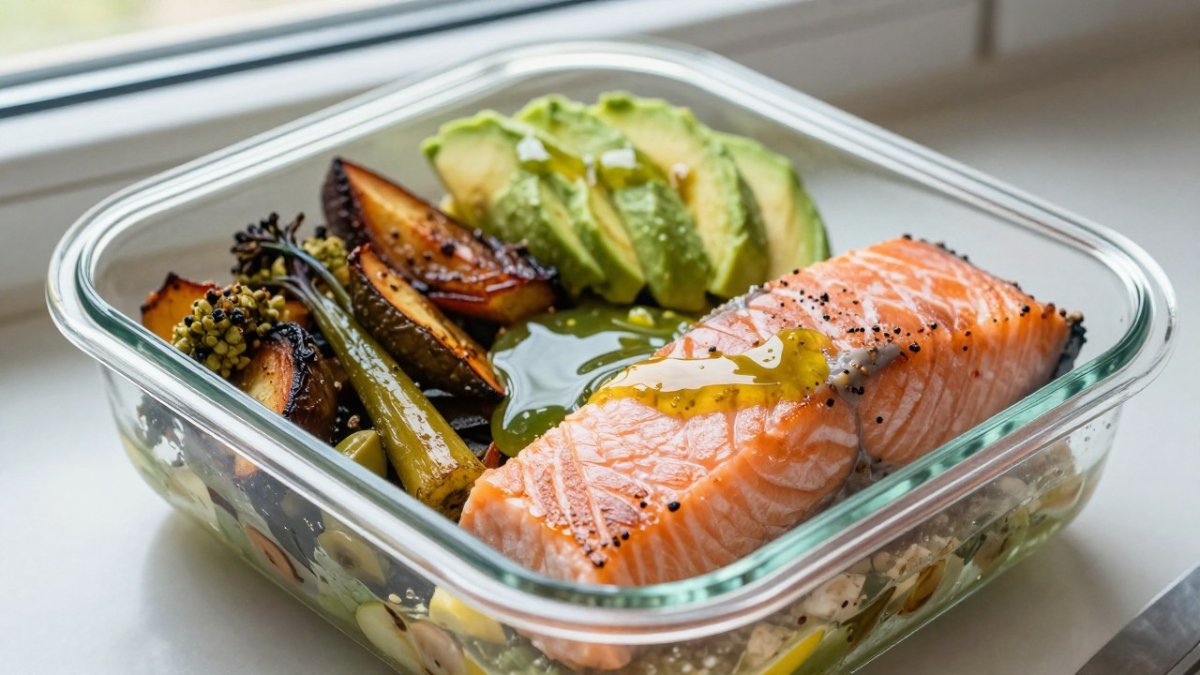
**1. Salmon provides omega-3 fats, and the vegetables supply fiber and micronutrients (Ask the expert: Omega-3 fatty acids • The Nutrition Source).
2. Chicken Lettuce Wraps with Avocado Sauté ground chicken with garlic, ginger, and coconut aminos, then spoon the mixture into butter lettuce cups with sliced avocado and cucumber. The recipe avoids grains and legumes entirely.
3. Sweet Potato and Egg Breakfast Hash Dice sweet potato and sauté it in avocado oil until crisp, then add two eggs and sautéed spinach.
4. Cabbage and Wild Salmon Stir-Fry Shred green cabbage and stir-fry it with flaked canned wild salmon, garlic, and a splash of coconut aminos. Cabbage is a cruciferous vegetable that adds fiber to a meal.
5. Lemon-Herb Chicken Thighs Bake bone-in chicken thighs with lemon, rosemary, and olive oil alongside sauerkraut in a coconut wrap. Make a double batch and use leftovers for lunch the next day.
Watch out: Canned fish is a genuine time-saver, but check the label for added seed oils.
Here is a quick reference for the five Gundry-friendly recipes, with the main ingredients and the reason each one fits the approach.
Recipe | Main ingredients | Why it is Gundry friendly |
|---|---|---|
Salmon and Roasted Vegetable Bowl | Wild salmon, broccoli, avocado | No legumes or hulled grains; omega-3 fats and fiber |
Chicken Lettuce Wraps | Ground chicken, butter lettuce, avocado | No grains or legumes; coconut aminos replace soy sauce |
Sweet Potato and Egg Hash | Sweet potato (skin removed), eggs, spinach | Skinless sweet potato is lower in lectins; eggs add complete protein |
Cabbage and Wild Salmon Stir-Fry | Green cabbage, canned wild salmon, garlic | Cruciferous vegetable adds fiber; uses pantry staples |
Lemon-Herb Chicken Thighs | Bone-in chicken thighs, olive oil, sauerkraut | Low-lectin carrots; no ingredients to avoid |
Sourcing Sustainably Without Adding Hours to Your Week
Sustainable sourcing does not require visiting five stores. A few habits make it manageable:
- Buy seasonal produce. It tends to be fresher, which means more nutrients and less food waste.
- Choose wild-caught fish and pasture-raised or Omega 3 eggs when your budget allows. These are often a better match for the eating pattern you are building.
- Shop your frozen section for vegetables and berries. They reduce waste because you use only what you need.
- Use one main grocery order each week. Online delivery or a standing list keeps the process short.
Prioritize the items you eat most often. Upgrading your top five purchases matters more than trying to buy everything organic.
How to Build Healthy Eating Habits That Last Past the First Month
Most people abandon new eating habits because they try to change everything at once. A gradual approach is more realistic and more lasting.
- Start with one meal. If you are trying to make healthy eating stick long term, seven steps to stop yo-yo dieting and keep weight off lays out concrete habits to follow. Pick lunch or breakfast and make it consistent for two weeks.
- Keep your base foods the same. Familiar meals reduce the effort required to stay on track.
- Plan for the bad weeks. Keep one emergency meal in the freezer, such as a batch of chili made with approved ingredients.
- Track energy, not just weight. Notice whether you feel more steady through the afternoon. That feedback helps you adjust.
Gundry-friendly eating works best when it fits your life. Small, repeatable changes add up to lasting results.
If your schedule is the thing standing between you and better eating, Nutrition is Fashionable can help you build a plan that fits your life, your preferences, and your health goals. Schedule a consultation with Pamela to start with an approach designed around you.
Frequently Asked Questions
How can busy professionals eat healthy with little time?
Lean on a small set of repeatable meals rather than a new plan each day. Batch one protein, one grain or vegetable base, and one sauce on a single afternoon, then assemble lunches in minutes during the week. Keep staples such as canned wild fish, leafy greens, avocado, nuts and seeds on hand Gundry friendly choices avoid lectin-heavy beans, grains and nightshades where possible, so a short list of approved ingredients can make shopping and decisions easier during a hectic week.
How do you meal plan for a busy workweek?
Pick three or four dinners and two or three lunches, then build a shopping list from those meals only. Choose one shopping day, buy extra of the ingredients that repeat, and prep components rather than full meals. Plan leftovers on purpose, so a Monday roast becomes a Tuesday salad. Sustainable meal planning also means buying seasonal produce and using what you bought before it spoils, which reduces both cost and food waste.
What are quick, balanced meals to take to work?
A balanced lunch usually combines a protein, a non-starchy vegetable, a healthy fat and a small portion of a lectin-conscious carbohydrate. Examples include a salad of leafy greens with wild salmon, olive oil and sauerkraut , or a jar of cooked pasture-raised chicken with roasted broccoli and avocado. These meals travel well, need no reheating, and keep energy steady through the afternoon.
How can I build healthy eating habits that last?
Change one habit at a time and attach it to something you already do, such as packing lunch the night before a meeting day. Track the habit for two weeks, then add the next one. At Nutrition is Fashionable, we focus on gradual, lifelong changes that fit your schedule and preferences, because restrictive diets tend to collapse under a busy calendar.