 How-to
How to Maintain Weight Loss During Menopause: 7 Steps
Last Updated: November 15, 2026
Quick Summary
To maintain weight loss during menopause, focus on a protein-rich, whole-food meal plan, regular strength training and aerobic activity, consistent sleep, and tracking progress beyond the scale. Hormonal shifts make weight creep back easier, so steady daily habits matter more than strict dieting.
- Fill half your plate with non-starchy vegetables and choose protein at every meal to protect muscle.
- Aim for about 150 minutes of moderate aerobic activity each week, paired with strength training twice a week.
- Drink at least 2 litres of water daily.
- Track your waist measurement, how your clothes fit and your energy, not just the scale.
- Keep a consistent bedtime and stop caffeine by early afternoon to support sleep.
Table of Contents
- Why Keeping Weight Off Gets Harder During Menopause
- Step 1: Build a Gundry-Friendly Menopause Weight Loss Meal Plan
- Step 2: Know Which Foods to Avoid for Menopause Belly Fat
- Step 3: Pair Strength Training With Aerobic Activity
- Step 4: Protect Sleep and Manage Stress
- Step 5: Track Progress Beyond the Scale and Handle Plateaus
- How Long Menopause Weight Gain Lasts and What to Expect
- Your Next Step: Building a Maintenance Plan That Fits Your Life
- Frequently Asked Questions
Menopause changes how your body stores fat, builds muscle and handles blood sugar, so the weight you lost can creep back even when you eat the same way you always did. Learning to maintain weight loss during this stage takes a different approach than the diets that worked in your twenties. At Nutrition is Fashionable, our Certified Holistic Health Coach works with clients on exactly this problem, using a plan built around your body and daily life rather than a one-size-fits-all diet.
Here's the reassuring part. Maintaining weight during menopause usually comes down to a set of basic habits you can sustain: eating well, staying active and getting enough sleep. Below, we walk through seven steps to help you maintain weight loss, each one practical and easy to start this week.
Why Keeping Weight Off Gets Harder During Menopause
Weight loss that held before menopause often slips away during it. Two shifts drive most of this: hormones and metabolism. Both are normal, and both can be worked around.
The Role of Declining Estrogen and Shifting Fat Distribution
As estrogen falls, many women notice fat moving toward the midsection. This is why menopause belly fat is so common, even when the scale barely changes. Waist size can grow while total weight stays put, so tracking only the scale can hide real progress.
Knowing this helps you set better goals. Focus on how your clothes fit, your waist measurement and your energy, not just the number on the scale.
Age-Related Changes in Metabolism and Muscle Mass
Muscle mass tends to drop with age, and less muscle means your body burns slightly fewer calories at rest. That is why eating the same amount you did at 40 can now lead to weight gain. The good news is that muscle responds well to strength training, which is covered in Step 3.
Step 1: Build a Gundry-Friendly Menopause Weight Loss Meal Plan
Start with food, because what you eat each day shapes almost everything else. A Gundry-friendly approach centers on whole, plant-forward meals that limit lectin-rich foods and processed ingredients. Research points the same way: a 2026 Harvard Gazette report found that a low-insulinemic diet and the Planetary Health Diet ranked among the most effective healthy eating patterns for women in menopause (Harvard Gazette report on diet patterns and menopause).
A simple daily template looks like this:
- Breakfast: Eggs or a protein-rich smoothie with leafy greens and berries
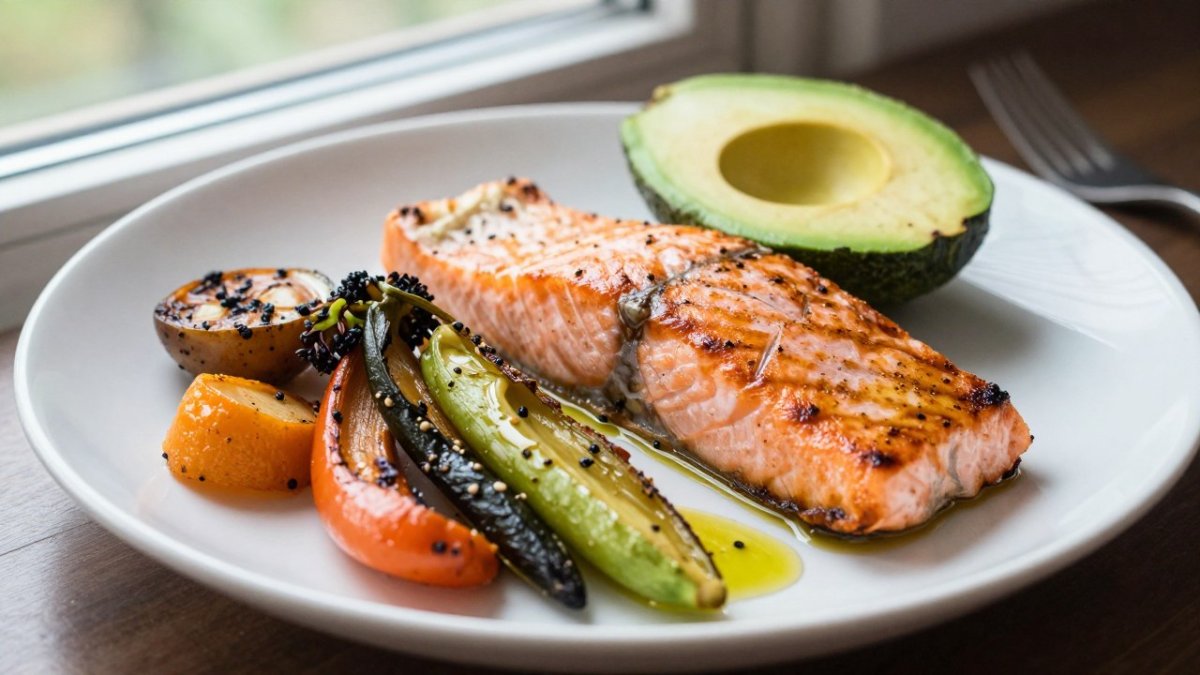
- Lunch: A large salad with grilled chicken or wild salmon, olive oil and avocado
- Dinner: Roasted vegetables, a palm-sized portion of protein and a small serving of cooked quinoa
- Snacks: Raw nuts, olives or cucumber slices with hummus made from chickpeas
Keep these habits as you build your plan:
- Fill half your plate with non-starchy vegetables
- Choose protein at every meal to protect muscle
- Drink at least 2 litres of water daily (Weight Management Module for Perimenopausal Women)
For a quick dinner that fits this plan, try a simple baked chicken-tender recipe served over a big green salad.
Here is a quick way to scan the daily meal template and habits from this step.
| Meal or habit | What it includes | Key guidance |
|---|---|---|
| Breakfast | Eggs or protein smoothie | Add leafy greens and berries |
| Lunch | Large salad | Grilled chicken or wild salmon, olive oil, avocado |
| Dinner | Roasted vegetables | Palm-sized protein and small cooked quinoa serving |
| Snacks | Raw nuts, olives, cucumber | Hummus made from chickpeas |
| Water | Daily intake | At least 2 litres per day |
Step 2: Know Which Foods to Avoid for Menopause Belly Fat
Cutting back works better when you understand why a food works against you, not just that it does.
Start by reducing these:
- Sweetened drinks, fruit juice and sugary coffee drinks
- White bread, pastries, crackers and most packaged snacks
- Fried foods and heavily processed meats
- Alcohol, which can disrupt sleep and raise cravings the next day
- Conventional dairy and grain-heavy breakfasts if you notice bloating or sluggishness after them
A common pattern is that women cut calories but keep the same processed foods, then wonder why waist measurements stall. The fix is usually a swap, not a starvation diet. Trade the afternoon cookie for a handful of raw nuts or olives. Swap white rice for cooked quinoa or cauliflower rice. Replace creamy bottled dressings with olive oil, lemon and herbs.
Watch out: sugary "healthy" snacks such as granola bars, flavored yogurt and fruit juice can add up fast. Check labels for added sugar and seed oils before assuming a product fits your plan, and be especially careful with "keto" or "gluten-free" packaged foods that are still highly processed.
Eating out is where many plans quietly unravel. Ask for dressings and sauces on the side, choose grilled or roasted preparations over fried, and build the meal around vegetables and a palm-sized portion of protein. You do not need to be perfect. You need a default you can repeat on a busy Tuesday.
For a simple swap-based dinner, try baked chicken tenders coated in almond flour and herbs instead of breaded and fried, served with a large salad dressed in olive oil and lemon.
Step 3: Pair Strength Training With Aerobic Activity
Movement matters more than most women expect. Experts generally recommend about 150 minutes of moderate aerobic activity each week, and many guidelines pair that with strength training (The Menopause Society guidance on physical activity). Walking, cycling and swimming all count toward the aerobic goal.
Strength work protects the muscle that keeps your metabolism steady. Try two sessions a week using:
- Bodyweight squats and wall push-ups
- Resistance bands for rows and shoulder presses
- Light dumbbells for lunges and glute bridges
Think of strength training as the step that makes your food plan work better over time.
Step 4: Protect Sleep and Manage Stress
Poor sleep and high stress both push your appetite and cravings in the wrong direction. Hot flashes and night sweats often make this worse, so sleep deserves real attention.
Simple habits can help:
- Keep a consistent bedtime, even on weekends
- Cool the bedroom and use breathable bedding
- Stop caffeine by early afternoon
- Spend five minutes on slow breathing before bed
Stress management also belongs in your plan. A short daily walk, a few minutes of meditation or time with friends can lower the stress that drives late-night eating.
Step 5: Track Progress Beyond the Scale and Handle Plateaus
Weight often stalls for weeks, then moves again. This is normal, and it does not mean your plan has failed. Track several measures instead of only the scale:
- Waist measurement, taken at the same spot each week
- How your clothes fit
- Energy levels, sleep quality and mood
- Strength gains, like adding reps or weight to a workout
If progress stops for more than four to six weeks, review your food log honestly. Portions often grow without notice, and a small change in calories or activity can restart progress. Research on menopausal women in weight programs also found that changing physical-activity habits is hard for many people (H. H. Chiu et al., weight-management study in menopausal women). If you feel stuck, that difficulty is common and worth discussing with a coach.
How Long Menopause Weight Gain Lasts and What to Expect
Menopause-related weight changes do not last forever, but they also will not reverse on their own overnight. Hormone levels settle over several years after menopause, and your body adjusts along with them. Expect gradual change rather than quick results.
Staying consistent with the habits above is what makes the difference. The British Menopause Society states that calorie-reducing diets combined with more exercise, including strength work, offer the strongest evidence for long-term weight management (British Menopause Society clinician tool on nutrition and weight gain).
Your Next Step: Building a Maintenance Plan That Fits Your Life
Maintaining a loss is a different skill from losing it. Most plans focus on the loss and then leave you without a structure for the months after. A practical maintenance plan has three phases, and each one answers a different question.
Phase 1: Stabilize (weeks 1-4 after reaching your goal). Do not change everything at once. Keep the meal template and activity routine that got you here, and add a small buffer of food, often one extra palm of protein and one extra serving of vegetables, rather than reintroducing old snacks. Weigh or measure your waist at the same time each week. The goal of this phase is not to lose more; it is to prove you can hold steady.
Phase 2: Monitor and adjust (months 2-6). Pick two or three markers and check them on a fixed schedule: waist measurement weekly, strength or reps monthly, energy and sleep daily. A common pattern is a slow drift upward of two to three pounds over several weeks, which is far easier to correct than a ten-pound regain.
Phase 3: Troubleshoot (when progress stalls or weight creeps back). Plateaus and partial regain are normal, especially when sleep, stress or travel disrupt routines. Before cutting calories hard, check the basics: Are you still eating protein at every meal? Has your strength training slipped to once a week? Are evening snacks back?
Tracking beyond the scale matters here. Waist measurement, how clothes fit, strength gains, sleep quality and energy all reflect progress that the scale can hide when body composition is shifting. Keep a simple weekly note rather than a daily weigh-in if the scale affects your mood.
Individual needs vary by stage and health history. Perimenopause, early postmenopause and later postmenopause can each change appetite, sleep and recovery, and conditions or medications that affect weight may require a clinician's input.
If you want hands-on support putting these phases into practice, our wellness coaching options are built around bio-individuality, and you can learn more about our approach on the About Pamela page. For a broader framework beyond menopause, read our guide on sustainable weight management for women that lasts.
Frequently Asked Questions
What is the best way to maintain weight loss during menopause?
Combine a consistent eating pattern built on whole vegetables, quality protein and fiber-rich foods with regular physical activity that includes both aerobic exercise and strength training. Start with changes you can sustain for years rather than short-term restriction, and adjust gradually as your needs change.
Why is it harder to keep weight off during menopause?
Declining estrogen is associated with a shift in fat storage toward the abdomen, and muscle mass tends to fall with age, which lowers the energy your body uses at rest. Maintaining weight during menopause usually comes down to basic habits such as physical activity and eating well. A plan that accounts for real schedules and energy levels tends to hold up better than an aggressive one.
How much exercise helps maintain weight loss during menopause?
Menopause guidance commonly recommends at least 150 minutes of moderate aerobic activity each week, combined with strength training. Strength sessions two or three times a week help preserve the muscle that supports metabolism. If 150 minutes feels out of reach, start with shorter daily walks and add strength work gradually, then build toward the full target over several weeks.
How long does menopause-related weight gain last?
Current research does not give a single fixed timeline, and individual experiences vary widely. Many women notice the most change during perimenopause and the years immediately after their final period, while weight and fat distribution may stabilise once hormonal shifts settle. Consistent habits around food, movement, sleep and stress matter throughout this period. If weight changes are sudden, large or accompanied by other symptoms, speak with a healthcare professional to rule out other causes.