 blog
9 Bio-Individual vs One-Size-Fits-All Diet Differences
Last Updated: November 21, 2026
Quick Summary
Bio-individual diets tailor eating to each person's biology, habits and daily life, while one-size-fits-all diets apply the same rules to everyone. People respond differently to the same food, so a plan built around one person can succeed where a generic plan fails. The approach works best when it builds on established dietary principles rather than replacing them.
- Bio-individual diets start from your biology, habits and life; one-size-fits-all plans start from a single standard.
- Two people can eat the same meal and show different blood sugar and energy responses.
- Choose a bio-individual approach if you have already tried two or more standard plans without lasting results.
- Anyone with a diagnosed condition should personalize through a clinician or registered dietitian.
- Track how your energy and digestion respond, and change one or two habits at a time.
Table of Contents
- What Bio-Individuality and Personalized Nutrition Mean
- Why One-Size-Fits-All Diets Fall Short for Many People
- Why the Same Food Affects People Differently
- Bio-Individual vs One-Size-Fits-All: Side-by-Side Comparison
- What the Evidence for Personalized Nutrition Really Shows
- Gundry-Friendly Recipes for a Bio-Individual Approach
- How to Stop Yo-Yo Dieting and Choose Your Next Step
- Frequently Asked Questions
Bio-individual diets and one-size-fits-all diets sit at opposite ends of the same question: should everyone eat the same way? Bio-individual diets start from the individual outward, while one-size-fits-all plans start from a single standard. Nutrition is Fashionable approaches that question from the individual outward. The short answer is that people respond differently to food, and a plan built around one person's biology, habits and life can work where a generic plan fails. Below, we compare the two approaches, explain the evidence, and share Gundry-friendly recipes you can start with.
What Bio-Individuality and Personalized Nutrition Mean
Bio-individuality is the idea that each person's body responds to food in its own way. Personalized nutrition is the practical version of that idea: dietary advice shaped around individual characteristics, which can include genetic composition, metabolism, and daily life.
A useful way to think about it is that the same meal can produce a different blood sugar curve, a different energy level, or a different digestive response in two people. For a practical, day-to-day look at what this approach involves, see a practical guide to personalized eating. Personalized nutrition tries to account for those differences rather than assuming they do not exist. You can see who offers this kind of guidance and what it covers on the About Pamela page.
For a practical starting point, Frontiers in Nutrition review on personalized nutrition defining individual characteristics as the basis for dietary advice describes the approach as basing food advice on individual characteristics, including genetic composition.
If you want a guide to what this looks like day to day, our [page:1] walks through the basics.
Why One-Size-Fits-All Diets Fall Short for Many People
Universal diet rules are easy to publish and easy to follow on paper. The problem is that a single recommendation has to work for millions of people with very different responses to food.
Many people have tried a popular plan, lost motivation, and regained the weight. That pattern is common enough that it is often treated as a personal failing. A more useful reading is that the plan may not have fit the person's biology or daily life.
Dietary guidance still has value. Dietary Guidelines for Americans 2020-2025 stating that a healthy dietary pattern benefits individuals regardless of age, race, or health status shows that broad principles remain useful. Bio-individual planning builds on those principles rather than replacing them.
Why the Same Food Affects People Differently
Individual differences in food response are a live area of research. Interest is growing in how metabolism responds to diet. Tastewise 2026 personalized nutrition trends report on consumer focus on metabolism reports that metabolism is a priority for a meaningful share of personalized-nutrition consumers, particularly in Canada.
Research programs are also testing this directly. The NIH Nutrition for Precision Health program studying how diet, genes, proteins, the microbiome, and metabolism interact examines why people respond differently to the same diets.
Some of the most cited findings come from a King's College London team, whose work reported that personalized advice helped participants make larger and more appropriate dietary changes than conventional guidance (Medical Xpress coverage of King's College London personalized nutrition study).
Bio-Individual vs One-Size-Fits-All: Side-by-Side Comparison
Most comparisons stop at a pros-and-cons list. A more useful exercise is deciding which approach fits your situation right now, because the honest answer is often 'a bit of both.'
Factor | Bio-Individual Approach | One-Size-Fits-All Diet |
|---|---|---|
Starting point | Your biology, habits, and life | A standard set of rules |
Adjustments | Tailored over time | Same plan for everyone |
Focus | Long-term habits you can keep | Quick, uniform results |
Best for | People who have failed generic plans, or who have a diagnosed condition | People who want simple, fixed rules and a clear starting point |
Main limitation | Requires more personal attention and honest self-tracking | May not fit individual responses |
Typical failure mode | Drifting without structure or over-testing | Burnout and regain after a rigid phase |
A simple decision guide. Ask yourself three questions.
- Have you tried two or more standard plans and found they didn't stick? If yes, a bio-individual framework is worth the extra effort. If you have never followed a structured plan, a well-designed general pattern is a sensible first step, it is cheaper and simpler, and it gives you a baseline to compare against.
- Do you have a diagnosed condition, diabetes, high blood pressure, food allergies, or a digestive disorder? Personalization should then run through a clinician or registered dietitian, not a consumer test. General plans are not built to manage a diagnosis.
- What can you realistically sustain? Bio-individual eating depends on tracking how you feel and adjusting. If that level of attention will burn you out, a simpler pattern with a few personal tweaks may serve you better.
How to evaluate personalized nutrition claims. Whether you are reading a test report, an app, or a coach's plan, apply the same filters:
- Does it distinguish between a broad wellness concept and a research-backed method? A claim that a single test 'knows' your ideal diet is a warning sign.
- Does it tell you what the evidence is based on, genetics, microbiome, glucose response, or behavior support, and how strong that evidence is?
- Does it ask about your medical history, medications, and symptoms, or does it hand you a plan from a sample alone?
- Does it recommend eliminating entire food groups without a clinical reason? Extreme elimination carries real risks, including nutrient gaps and a disrupted relationship with food.
- Does it point you toward a registered dietitian or clinician when your situation is complex?
Costs, access, and value. Personalization ranges from free (tracking your own responses to meals) to paid testing and coaching. The value question is not 'is testing good?' but 'will this change what I actually do?' If a report will not alter your next grocery trip, it is not worth the spend.
Privacy and limitations. Genetic and microbiome data are sensitive. Before submitting a sample, check who owns the data, whether it can be shared or sold, and whether you can delete it. Also weigh test validity: results can vary between labs and between samples, and a finding does not equal a diagnosis.
Long-term outcomes. The visible research emphasizes variation and healthier habits more than multi-year clinical results. That means the strongest predictor of success is still adherence, whether the approach is one you can keep for years, not weeks. A bio-individual plan that you abandon in a month loses to a simple plan you follow for a decade.
Pros of bio-individual planning:
- Accounts for individual differences in food response
- Builds habits around your real schedule
- Encourages gradual, lasting changes
Cons of bio-individual planning:
- Takes more time and personal input
- Results depend on consistent effort over months
- Invites over-testing and false certainty if not guided
Pros of one-size-fits-all diets:
- Simple, clear rules
- Easy to find and follow
- A useful baseline when you are starting out
Cons of one-size-fits-all diets:
- May ignore how your body actually responds
- Often hard to sustain long term
- Poor fit for people managing a diagnosed condition
What the Evidence for Personalized Nutrition Really Shows
Personalized nutrition is not one thing, and the evidence is not equally strong across its branches.
Genetic profiling. The clearest evidence is narrow.
Microbiome testing. Gut microbiome analysis is commercially popular but still maturing.
Blood sugar and blood fat responses. This is where individual variation is best documented.
Behavior-change support. Some of the most cited findings come from a King's College London team, whose work reported that personalized advice helped participants make larger and more appropriate dietary changes than conventional guidance (Medical Xpress coverage of King's College London personalized nutrition study).
Balance matters here. Early twin research suggested people react differently to foods, but experts cautioned that the science was not yet strong enough to make fully personalized diets a necessity (Time report on a twin study of individual food responses).
A practical way to read the evidence: personalization is strongest as a framework for finding what works for you and weakest as a promise that a test will hand you the answer.
Watch out: a test result can create false certainty. If a report tells you to avoid a whole food group, check that recommendation against your symptoms, your labs, and a registered dietitian or clinician before restructuring how you eat.
Gundry-Friendly Recipes for a Bio-Individual Approach
Many readers following a Gundry-inspired lifestyle focus on whole, plant-forward meals with minimal processed ingredients. For a simple, practical dish to make at home, try the Super simple Chicken Tenders.
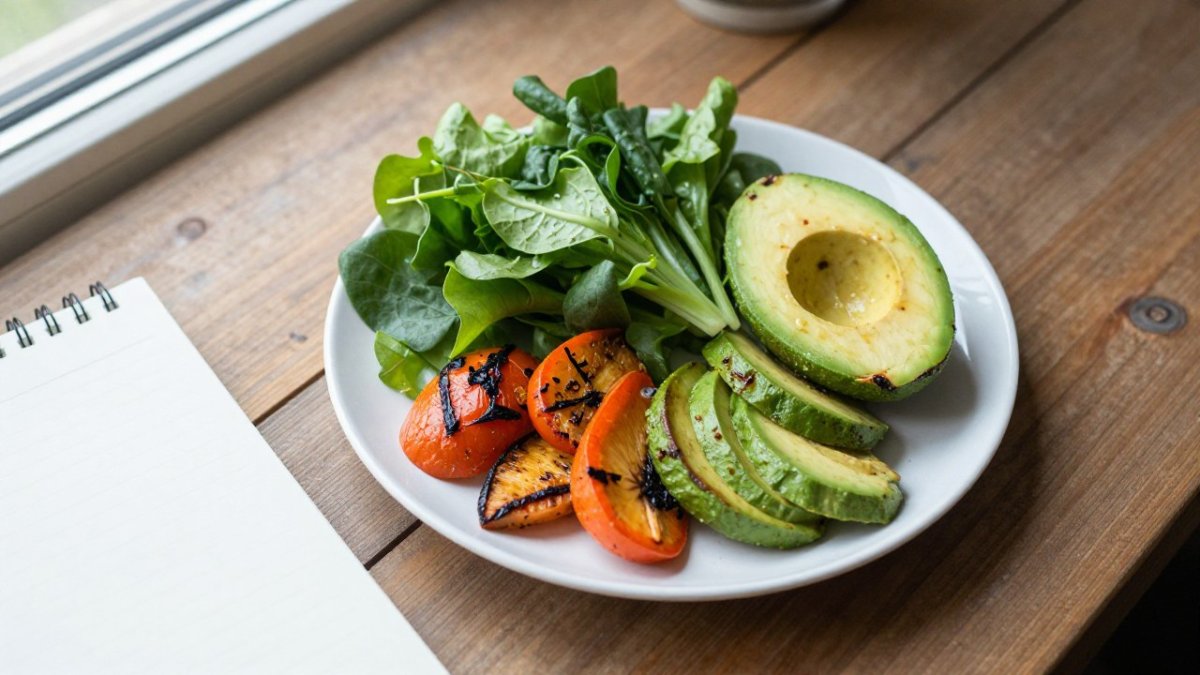
Picture a colourful dinner plate on a rustic wooden table: leafy greens, roasted vegetables and sliced avocado, with a notepad nearby for planning the week.
Simple Chicken Tenders. A sensible weeknight protein. Use pasture-raised chicken, a crust of ground nuts or seeds rather than refined breadcrumbs, and serve with a big green salad.
Waldorf Salad Lettuce Wraps. A light, fresh option. Swap traditional mayonnaise for an olive-oil-based dressing, use walnuts and crisp apple, and wrap the filling in butter lettuce. It is Gundry friendly because it uses whole ingredients, healthy fats and no refined sugar.
Roasted vegetable bowl with avocado. Roast a mix of broccoli and cauliflower with olive oil and herbs, then top with avocado and a handful of leafy greens. It is Gundry friendly because it prioritises vegetables and healthy fats while keeping grains out of the bowl.
Whichever recipe you try, check the ingredients against your own needs, since bio-individual planning means adjusting to what works for your body.
How to Stop Yo-Yo Dieting and Choose Your Next Step
Yo-yo dieting usually follows a cycle: a strict plan, rapid early results, burnout, and a return to old habits. A bio-individual approach aims to break that cycle by changing one or two habits at a time and building on them.
Start with a small, specific change. Add a vegetable to lunch, swap one refined snack for a whole-food option, or plan one Gundry-friendly dinner per week. Track how your energy and digestion respond, then adjust.
If you want structured support, personalized coaching from Nutrition is Fashionable can help you work through the process.
Ready to find out what a bio-individual plan could look like for you? Pamela at Nutrition is Fashionable helps people build sustainable, personalized eating habits that fit their real lives. Schedule a Consultation with Pamela to start.
Frequently Asked Questions
How is personalized nutrition different from a one-size-fits-all diet?
A one-size-fits-all diet gives the same rules to everyone, such as a fixed calorie target or a single macronutrient split. Personalized nutrition starts from individual characteristics, including genetic composition, eating habits, health goals and life circumstances, and uses them to shape food advice. In practice, the difference is that personalized plans ask how your body and routine respond, rather than assuming you match a population average.
Does personalized nutrition work better than a standard diet?
The evidence is promising but not yet conclusive. A King's College London study reported that personalized advice helped participants make larger and more appropriate dietary changes than conventional advice, though the reported result did not state the sample size. A 2026 review noted clear utility for genetic profiling in monogenic obesity while describing personalized nutrition as a promising strategy rather than a proven standard. Experts also caution that the science is not yet strong enough to make fully individualized diets necessary for everyone.
Why do people respond differently to the same foods?
Individuals vary in genetics, gut microbiome, metabolism and lifestyle, which can change how blood sugar, insulin and blood fats respond to the same meal. Noticing your own responses to meals is a practical way to learn what works for you.
How can I tell whether a diet plan is too restrictive for me?
A plan that is too restrictive usually eliminates whole food groups without a clear medical reason, leaves you hungry or exhausted, or is hard to keep past a few weeks. Broad dietary principles remain useful, so extreme rules are rarely necessary. If a plan makes eating feel stressful or isolating, that is a signal to adjust it toward something sustainable.